
People often ask me about the difference between acupuncture and dry needling. It’s a really good question, because if you’ve had needling before, how can you be sure which one you received? So I thought I’d shed some light. 🙂
Acupuncture and dry needling: different approaches
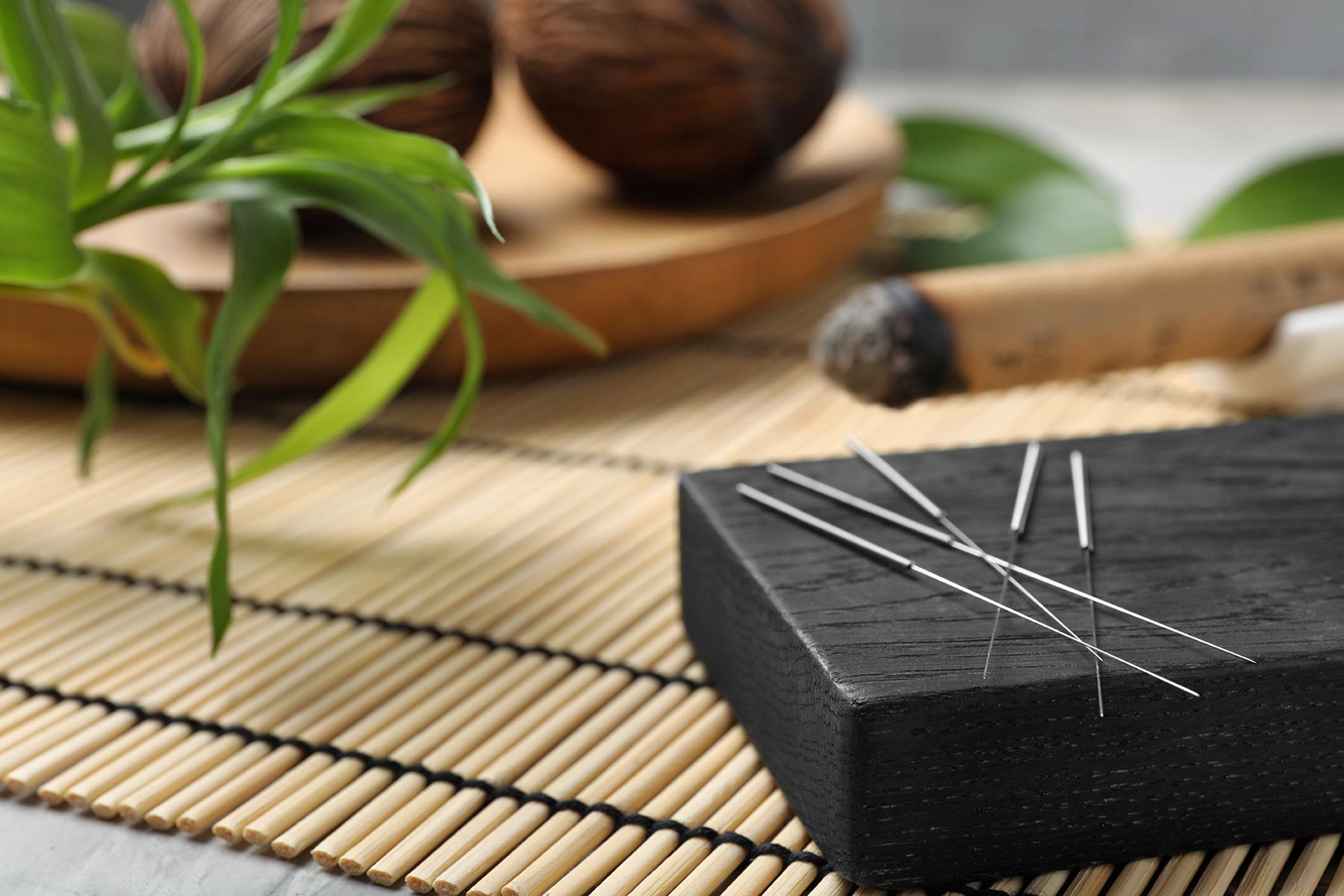
Both use acupuncture needles, though the needles and the way they’re used can differ greatly.
In Australia, acupuncture is a protected title. Acupuncturists are legally required to complete recognised Chinese medicine training, usually involving three to four years of full-time study, and learn to use a system of meridians, channels and acupuncture points. Acupuncture can be used for musculoskeletal concerns while also taking your wider health into account—including digestion, headaches, sleep, stress and mood, and hormonal health. It’s a holistic approach to supporting wellbeing and treating a broad range of health conditions. You can read more about acupuncture treatments here.
Dry needling is offered by practitioners such as physiotherapists and chiropractors, usually as an additional technique within their existing profession. It commonly focuses on local muscles or tender points, sometimes called trigger points. Course lengths for dry needling vary, but as one example, the Australian Physiotherapy Association’s Level 1 course for physiotherapists involves 21.5 hours of training, including online learning and a two-day practical component.
Why “dry” needling?
When I looked into it, I wondered why it was called dry needling—and whether there was such a thing as wet needling. Dr Janet Travell, who later became John F. Kennedy’s personal physician, helped popularise treatment for painful muscle points. She initially explored injecting them with a local anaesthetic, and also experimented with using the needle without injecting anything. That’s the basic distinction: with “wet” needling, a substance is injected; with dry needling, nothing is injected.
Later research suggested that needling without an injection could relieve trigger point pain too. Karel Lewit’s 1979 study explored the effect of the needle itself, rather than the substance injected, and helped bring attention to dry needling as a treatment.
President Kennedy wasn’t the only fan of needles… Wasn’t there another president who helped make acupuncture popular in the West?
You might think of President Nixon’s 1972 visit to China. Pat Nixon saw acupuncture treatments during the trip, and the demonstrations impressed her. A year earlier, New York Times journalist James Reston was reporting in China when he underwent an emergency appendectomy. While recovering in hospital, he received acupuncture for post-operative discomfort and abdominal distension. His account (read James Reston’s original 1971 article here), followed by the Nixons’ high-profile visit, helped bring acupuncture to wider attention in the West. That was acupuncture within a Chinese medical context—not dry needling for muscle trigger points.
What might the treatment feel like?
People experience needling differently. Some find dry needling more intense; others describe it as a kind of “good pain” and feel a sense of release afterwards. Acupuncture sensations vary too, and we all have different sensitivities.
There are different styles of acupuncture, too. Japanese, Chinese and Korean approaches may vary in the number of needles used, how they’re stimulated and how long they’re retained. Each practitioner has their own approach, so it’s quite possible to have different experiences with different acupuncturists.
Personally, I take a gentle approach and tailor treatment to your comfort. I explain what I’m doing, check how you’re responding and adjust if needed. Strongly stimulating needles to the point of creating stress has always felt counterintuitive to me. Everyone has their own approach—and this one is mine. 😉 My aim is to help your body and mind settle.
Which approach is best?
Whichever works for you :). If dry needling has helped you, that’s great. You don’t need to stop a treatment that’s working for you. If you’re curious about what acupuncture might offer, you’re welcome to ask me about your previous experience and what you’d like help with. We can talk through whether this approach feels right for you.
I hope this has helped clarify the difference between acupuncture and dry needling. Feel free to comment or ask a question below. We learn a lot by hearing each other’s experiences.
By Olivia Shurdova, registered acupuncturist and Chinese medicine practitioner based in Cromer in the Northern Beaches of Sydney. To learn more about Olivia, click here.
